Tag: Nomenclature Neptune

  • A great app for learning organic chemistry basics

    A great app for learning organic chemistry basics

    Learn IUPAC Nomenclature, also known as Nomenclature Neptune, is one of the rare useful apps for students because it combines brief theoretical insights with hands-on practice, making it feel like you are experiencing organic chemistry firsthand. A playful and educational app, it is free at basic levels, with additional levels and premium content, available for Android and iOS.

    I want to tell you about an app I discovered by chance while scouring the app stores. I was looking for something useful to practice a subject that has always been elusive for me: Chemistry.

    More specifically, the app I’m talking about focuses on organic chemistry and its fundamentals: hydrocarbons and some of the main functional groups.

    Although it doesn’t cover a vast amount of content, you’ll find that it has aspects that make it remarkable for its ability to quickly convey the mechanisms of organic chemistry.

    You will immediately put into practice the principles that govern compounds. This is a fundamental aspect for truly grasping the concepts! In no time, you’ll feel like you are mastering the basics of organic chemistry, a realm of chemistry that often intimidates and discourages those faced with hydrocarbons and other strange compounds.

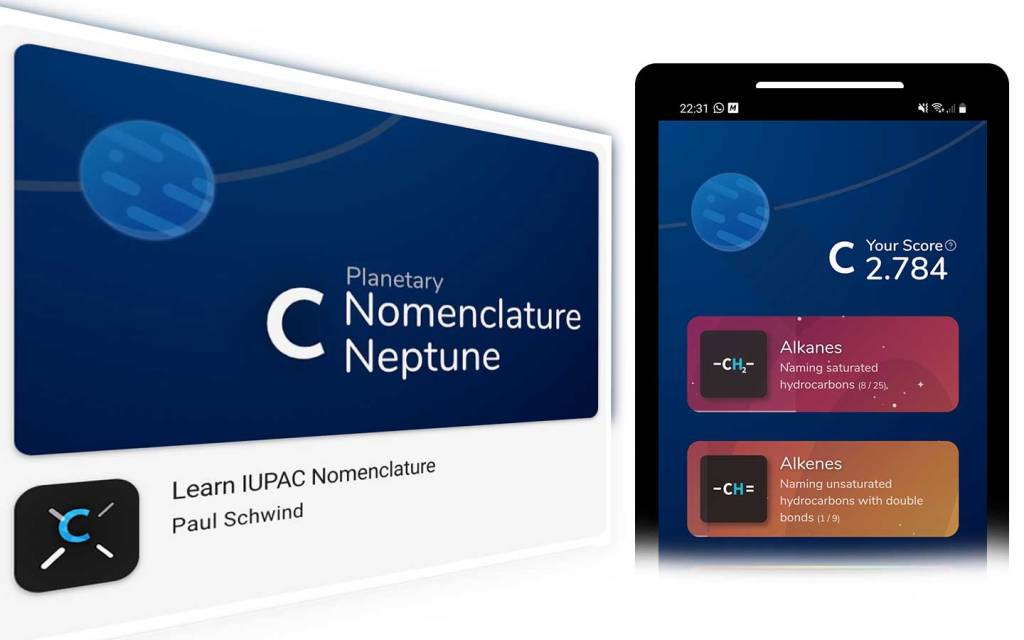
    The cover image of the app on the Android and iOS stores.

    I would say that the ‘formula’ – to stay within the realm of chemistry! – of Nomenclature Neptune follows the freemium model: it is free for the initial levels, which include the basic organic compounds, and then if you want to unlock all subsequent levels – with their respective molecules – it requires a one-time purchase of $3.99. Thus, a very modest price if you want to access all the features.
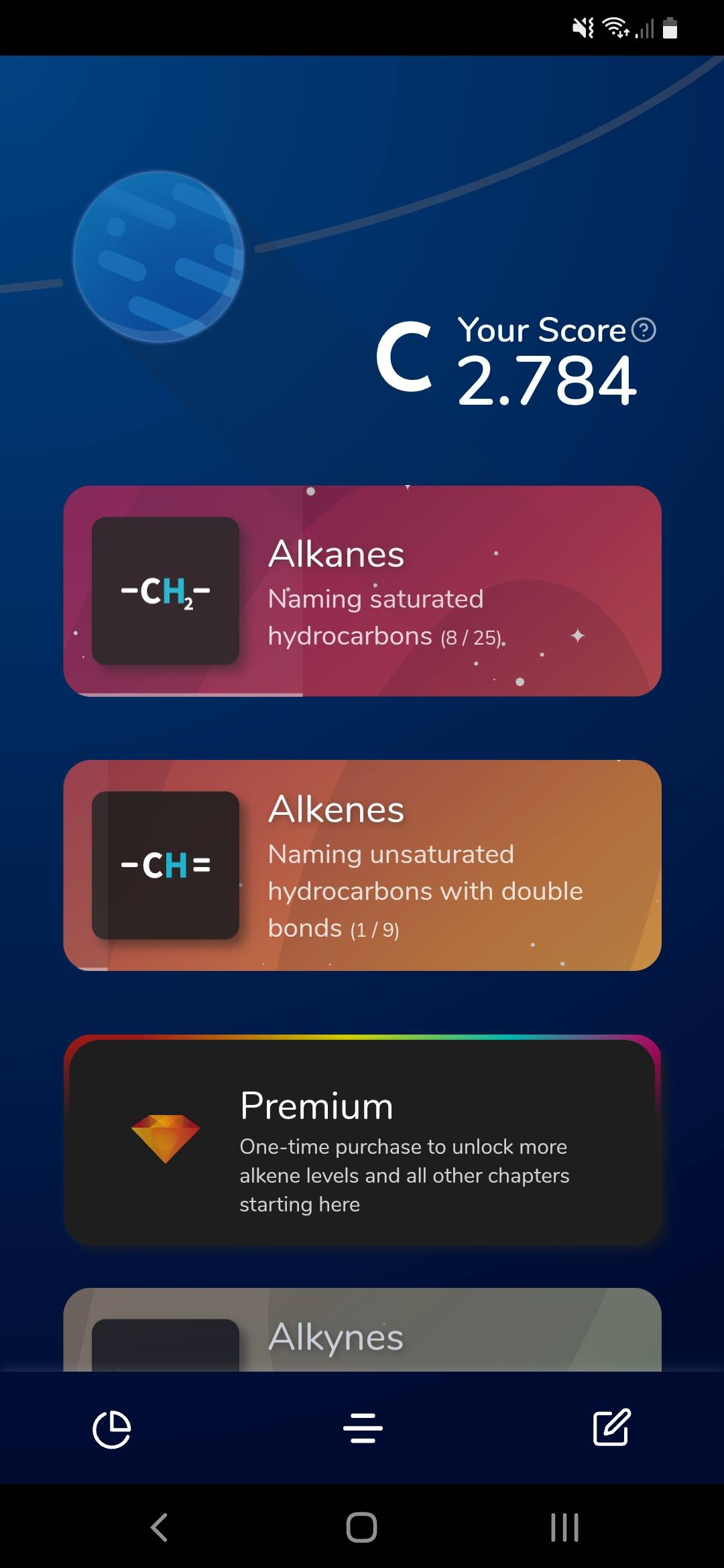
    The initial screen you see when opening Nomenclature Neptune.

    Why I find it excellent

    This app is smart because it embodies the prototype of active learning. To truly understand and assimilate a concept, it’s not enough to just read the theoretical information and leave it at that. No, you have to try it out! And this is even more true for chemistry, an experimental laboratory science.

    If it remains confined to books and memorized theories, it will always be difficult to grasp.

    On the contrary, it is better understood when put into practice. In fact, among my friends and acquaintances who have studied chemistry and work as chemists or researchers in the field, I have always noticed their ability to speak very concretely about chemical phenomena, often referring to their laboratory experiences or very real applications.

    But that’s another story.

    I was saying, Nomenclature Neptune starts with the initial organic compounds. So, the basic level covers alkanes, hydrocarbons that, as we know, have the empirical formula CnH(2n+2).

    At each level, a brief tutorial welcomes us, explaining how with Nomenclature Neptune we can easily construct organic molecules using a practical notation with sticks and letters, allowing us to compose on our smartphone screen a kind of structural formula for molecules.

    Introductory screens explaining how to build organic molecules.

    This aspect is truly intuitive, as the user simply needs to add carbon atoms and bonds (sticks), while hydrogen atoms are added or removed automatically by the program.

    Ah, I forgot to mention, the app is in English (and German is also available from the app’s internal menu), but for students and enthusiasts of scientific subjects, English (the international language of science) shouldn’t be a problem.

    An example

    From level to level, we are asked to construct certain molecules. For example, I’ve reached a fairly basic level in the first step, focusing on alkanes, where the screen prompts me with the request: ‘build: ethane’.

    Then I drag a carbon, and on the screen appears the first C, bonded to 4 Hs. I draw a line, and automatically another C is added, with the system adjusting the number of hydrogens: the formula appears as CH3––CH3. I say okay, and… I’ve entered the correct formula; the app tells me, ‘You fend off the meteorite!’
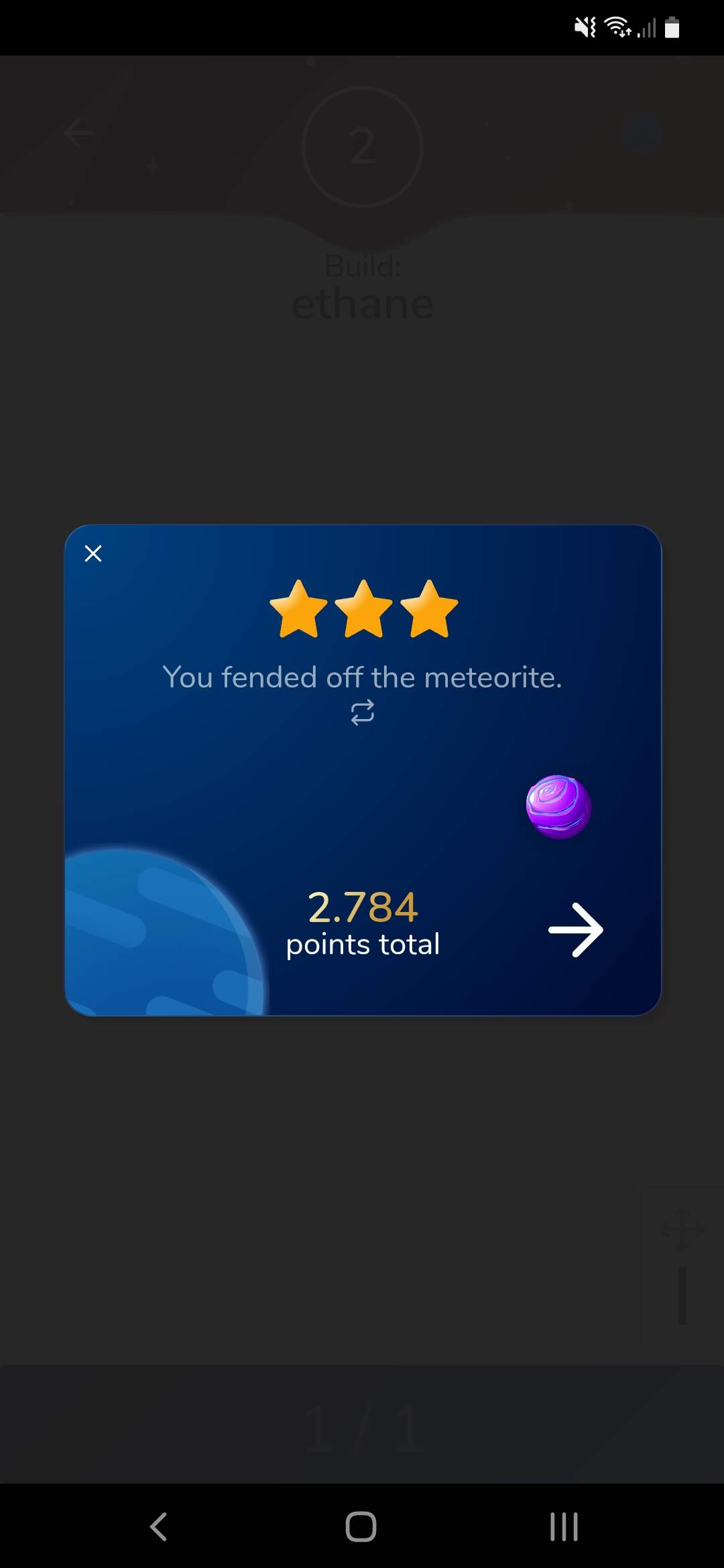
    For each completed mission, points are accumulated, and the app’s playful aspect revolves around the imaginary defense of Neptune from hypothetical meteorites: if I solve the exercise well, I’ve defeated the threatening wandering rock and earn points.

    Let’s try Level 2 together: alkenes

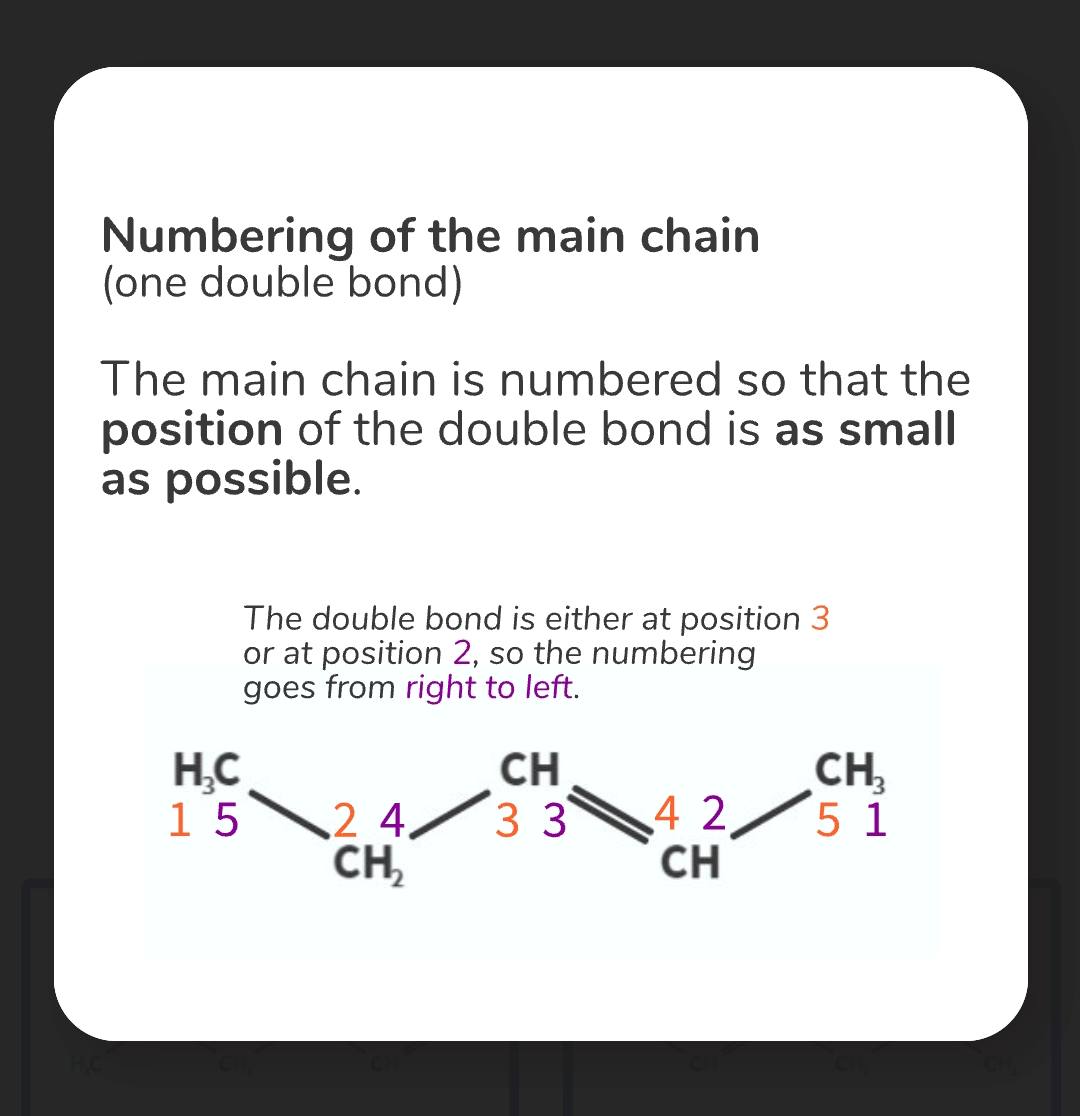
    Alkenes, also known as olefins, are unsaturated hydrocarbons containing one or more double bonds between carbon atoms, in addition to single bonds. As shown in the informative screen at the beginning of the level in Nomenclature Neptune (these cards are pleasant and useful nuggets of theory, to be read carefully!), here’s an example of alkenes with a double bond C=C.

    Moreover, Nomenclature Neptune also explains how to understand the numbering of the various carbon atoms: ‘The main chain is numbered so that the position of the double bond is as low as possible’.
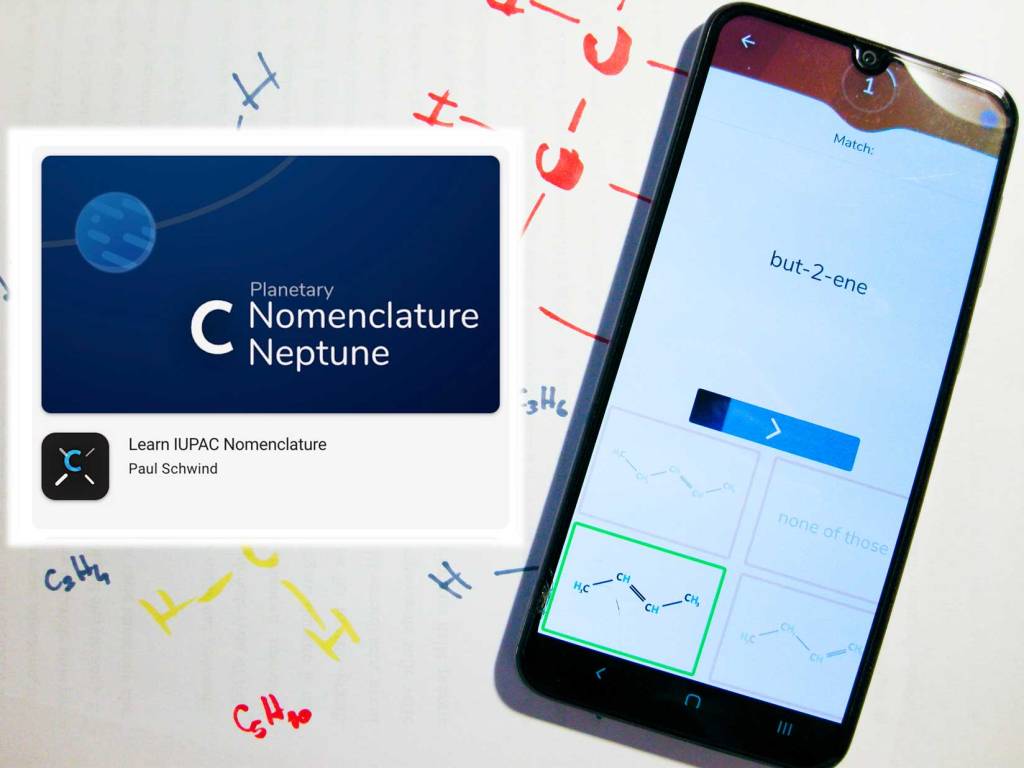
    So, multiple-choice quizzes are presented where we have to identify the correct name or the correct structural formula of the alkene presented.

    Let’s see… but-2-ene… I would say it’s an alkene with 4 carbon atoms (alkenes, unlike alkanes that end in -ane, have the ending -ene, so here ‘but-‘ automatically makes me think of butane, which has 4 carbon atoms; the alkene but-ene will therefore have 4 carbon atoms). The double bond will then be on the carbon in position 2: Correct!

    Alternatively, we are given a structural formula, and we have to indicate which of the four options is correct, meaning which is the correct name given to that molecule.

    In this case, it is indeed a pentene (pent-1-ene).

    A promising app

    Nomenclature Neptune is, in my opinion, very well-made. It allows us to become familiar with organic chemistry, almost letting us experience firsthand how hydrocarbons are structured.

    There’s also a small environment for freely constructing organic molecules, a sort of whiteboard where we can write and erase as we wish, creating molecules by adding carbon atoms and other elements (though to access the full range of elements, one needs to unlock the premium version). At the top row, the software tells us the name of the chemical chimera we’re assembling, as we add atoms and bonds.
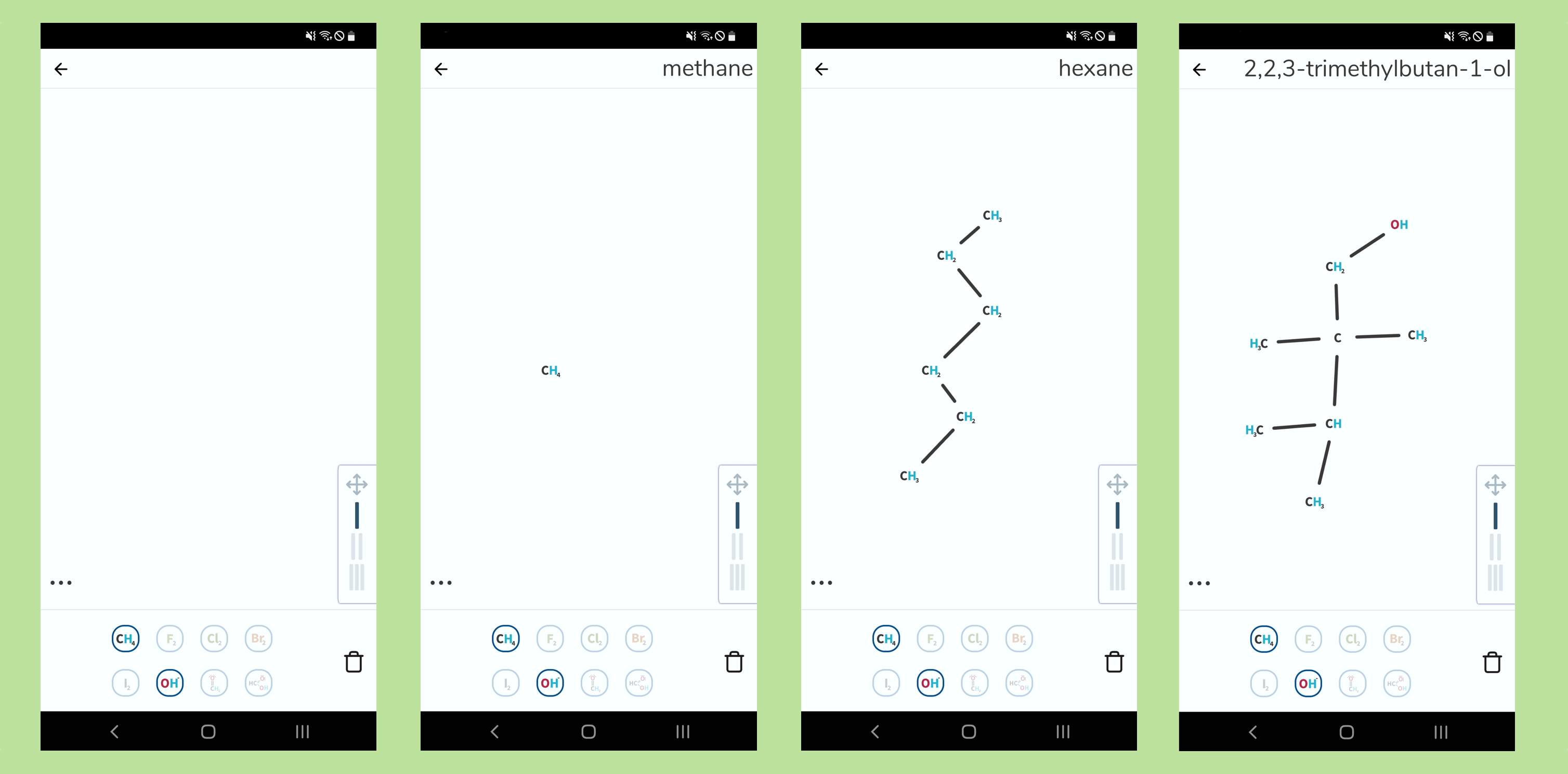
    Examples of screens from the ‘whiteboard’ where we can create our molecules.

    Having tried this app also allows me to reflect on the potential of such software. Useful study applications and games are becoming increasingly rare, especially those as practical and functional as this one, which is also thankfully free from intrusive advertisements. In my opinion, Nomenclature Neptune deserves to have wide distribution.

    Undoubtedly, it could be further improved to make it an even more comprehensive educational app.

    An improvement I would suggest is to emphasize the gamification aspect and scores, making it almost a small social platform for organic chemistry! Even a simple leaderboard or scoreboard to display scores of other players worldwide would be great. It could create small challenges between friends and acquaintances.

    In addition, while the modest price to unlock all features is admirable, it would be nice to have the opportunity to try more free levels before committing to a purchase. I would also expand the content with many more topics and insights into organic chemistry. In my opinion, these enhancements would only increase the appeal of this small yet useful app.

    An added benefit would also be translation into other languages.

    In any case, my compliments to the developer.

    Try Nomenclature Neptune! (Note: you can also find it on the stores under the name ‘Learn IUPAC Nomenclature‘):
  • Un’ottima app per capire i fondamenti della chimica organica

    Un’ottima app per capire i fondamenti della chimica organica

    Learn IUPAC Nomenclature, noto anche come Nomenclature Neptune, è una delle rare app utili per chi studia perché combina brevi cenni teorici con la pratica diretta, tanto che con essa sembra di toccare con mano la chimica organica. Un’app giocosa e istruttiva gratuita nei suoi livelli di base, con ulteriori livelli e contenuti premium, per Android e iOS.

    Vi voglio parlare di un’app che ho scoperto per caso frugando in lungo e in largo negli app store. Cercavo qualcosa di valido per fare pratica su una materia che per me è sempre stata sfuggente: la Chimica.

    Più nello specifico, l’app di cui vi parlo riguarda la chimica organica, e i fondamenti di essa: gli idrocarburi e alcuni dei principali gruppi funzionali.

    Anche se non è un’app vastissima quanto a contenuti trattati, vedrete che ha degli aspetti che la rendono formidabile per la sua capacità di far capire rapidamente i meccanismi della chimica organica.

    Metterete infatti subito in pratica i principi che governano i composti. Un aspetto fondamentale, questo, per fare propri i concetti! In un attimo avrete la sensazione di padroneggiare i rudimenti della chimica organica, un regno della chimica che spesso intimidisce e scoraggia chi si trova al cospetto di idrocarburi e altri strani composti.

    La cover di presentazione dell’app sugli store per Android e iOS

    Direi che la “formula” – per rimanere in ambito chimico! – di Nomenclature Neptune è quella delle app freemium: è gratuita per i primi livelli che comprendono i composti organici iniziali, dopodiché se volete sbloccare tutti i livelli successivi – con le relative molecole – il costo consiste in un unico acquisto una-tantum di 3.09€. Dunque un prezzo direi modestissimo se si vuole usufruire di tutte le funzioni.

    La schermata iniziale che troviamo aprendo Nomenclature Neptune.

    Perché la trovo ottima

    Questa app è intelligente perché è il prototipo dell’apprendimento attivo. Per capire e assimilare un concetto infatti non basta leggersi l’informazione teorica, e chiuso lì il discorso: no, bisogna provare! E questo è ancora più vero per la chimica, scienza sperimentale, di laboratorio.

    Se essa rimane materia esclusiva dei libri e delle teorie enunciate e mandate a memoria, sarà sempre difficile da afferrare.

    Al contrario, è meglio compresa se viene messa in pratica. Infatti, tra i miei amici e conoscenti che hanno studiato chimica e svolgono la professione di chimico o la ricerca in quella branca, ho sempre notato la loro attitudine a parlare in modo molto concreto dei fenomeni chimici, spesso riferendosi alle loro esperienze di laboratorio o ad applicazioni molto reali.
    Ma questa è un’altra storia.

    Dicevo, Nomenclature Neptune inizia con i primi composti organici. Il livello base è dunque quello degli alcani, idrocarburi che come sappiamo hanno formula bruta CnH(2n+2).

    Ad ogni livello ci accoglie un breve tutorial, che ci spiega come con Nomenclature Neptune possiamo costruire facilmente molecole organiche ricorrendo ad una pratica notazione con stanghette e lettere, per comporre a video sul proprio smartphone una specie di formula di struttura delle molecole.

    Alcune schermate introduttive che spiegano come costruire le molecole organiche.

    È questo un aspetto davvero intuitivo, perché l’utente dovrà semplicemente aggiungere atomi di carbonio e legami (stanghette), mentre gli atomi di idrogeno verranno aggiunti o tolti automaticamente dal programma.

    Ah dimenticavo, l’app è in lingua Inglese (ed è disponibile anche il Tedesco, scegliendo dal menù interno all’app), ma per gli studenti e appassionati di materie scientifiche l’Inglese (lingua ormai internazionale della scienza) non dovrebbe essere un problema.

    Un esempio

    Di volta in volta nei livelli ci verrà chiesto di costruire certe molecole. Ecco, dicevo per esempio che io sono arrivato a un livello non molto avanzato del primo step, quello sugli alcani, dove mi si presenta la schermata con la richiesta: “build: ethane” (costruire etano).

    Trascino allora un carbonio e a video compare un primo C, legato a un H4. Traccio una lineetta e automaticamente si aggiunge un altro C, e il sistema in automatico regola la quantità di idrogeni: la formula appare così: CH3––CH3. Direi che ci siamo, dò l’ok e …ho inserito la formula corretta, l’app mi dice: “You fend off the meteorite!”.

    Per ogni missione compiuta infatti si accumulano dei punti, e l’aspetto ludico dell’app ruota tutto attorno alla immaginaria difesa di Nettuno da fantomatici meteoriti: se risolvo bene l’esercizio ho sconfitto il sasso vagante minaccioso, e acquisto punti.

    Proviamo insieme il livello 2: gli alcheni

    Gli alcheni, noti anche come olefine, sono idrocarburi insaturi, che contengono cioè non solo legami singoli, ma presentano uno o più legami doppi tra atomi di carbonio. Come ci mostra Nomenclature Neptune nella schermata informativa di inizio livello (queste schede sono delle gradevolissime e utili chicche sintetiche di teoria, da leggere con attenzione!), ecco un esempio di alchene con un doppio legame C=C.

    Non solo, ma Nomenclature Neptune ci spiega anche come capire la numerazione dei vari atomi di carbonio: “La catena principale è numerata in modo tale che la posizione del doppio legame sia la più piccola possibile” (traduzione mia).

    Si presentano quindi dei quiz a risposta multipla, dove dovremo identificare il nome corretto, o la formula di struttura corretta, a seconda dell’alchene che ci viene proposto.

    Vediamo un po’… but-2-ene …direi che si tratta di un alchene con 4 atomi di carbonio (gli alcheni, a differenza degli alcani che hanno la desinenza -ano, possiedono la desinenza in -ene, quindi qui l’iniziale but- mi fa automaticamente pensare al butano, con 4 atomi di carbonio; l’alchene but-ene avrà dunque 4 atomi di carbonio).
    Il doppio legame poi riguarderà il carbonio in posizione 2: Corretto!

    Alternativamente, ci viene proposta una formula di struttura e noi dovremo indicare quale delle 4 risposte è corretta, cioè qual è il nome giusto che viene dato a quella molecola.

    In questo caso, è proprio un pentene (pent-1-ene).

    Un’app promettente

    Nomenclature Neptune è secondo me molto ben fatta. Ci permette di impratichirci con la chimica organica, facendoci quasi toccare con mano come sono fatti gli idrocarburi.

    C’è anche un piccolo ambiente di libera costruzione delle molecole organiche, una sorta di lavagna su cui possiamo scrivere e cancellare quanto vogliamo, dove creare molecole aggiungendo atomi di carbonio e altri elementi (per la verità occorre sbloccare la versione premium per poter utilizzare tutta la gamma di elementi). In una riga in alto il software ci dice il nome della chimera chimica che stiamo andando a comporre, mano a mano che aggiungiamo atomi e legami.

    Esempi di schermate della “lavagna” dove possiamo creare le nostre molecole.

    Aver provato questa app mi consente anche di riflettere sul potenziale di questi software, perché le applicazioni e i giochi utili allo studio sono sempre più rari, specialmente quelli così pratici e funzionali come questo, che è oltretutto per fortuna privo di pubblicità intrusiva. Nomenclature Neptune meriterebbe a mio avviso di avere una larga diffusione.

    Senz’altro si potrebbe anche migliorare ulteriormente, così da renderla un’app educativa ancora più completa.

    Un miglioramento che suggerirei è quello di insistere sull’aspetto della gamification e dei punteggi, facendolo diventare quasi un piccolo social della chimica organica! Anche una semplice leaderboard o scoreboard, dove visualizzare il punteggio degli altri giocatori nel mondo, non sarebbe male. Si potrebbero creare delle piccole sfide a distanza tra amici e conoscenti.

    Inoltre, anche se ammirevole il prezzo modesto richiesto per sbloccare tutte le funzioni, sarebbe bello poter provare altri livelli gratuiti prima di impegnarsi nell’acquisto. Amplierei poi i contenuti con molti più temi e approfondimenti di chimica organica. Tutto ciò a mio avviso non farebbe che aumentare l’appeal di questa piccola ma utile app.

    Un plus sarebbe anche la traduzione in altre lingue.

    Ad ogni modo, i miei complimenti allo sviluppatore,

    Provate Nomenclature Neptune! (nota: lo troverete sugli store anche con il nome di “Learn IUPAC Nomenclature“):